Physics is the study of the fundamental constituents of the universe and the laws that govern their behavior. It encompasses a vast range of phenomena, from the smallest subatomic particles to the largest cosmic structures.
Here's a breakdown of the scopes and branches of physics:
Scopes:
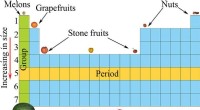
* Size: Physics studies phenomena across an incredibly vast range of scales, from the incredibly small (subatomic particles) to the incredibly large (the universe).
* Time: Physics investigates events across a wide range of time scales, from femtoseconds (10⁻¹⁵ seconds) to billions of years.
* Energy: Physics encompasses the study of all forms of energy, from the kinetic energy of moving objects to the potential energy stored in chemical bonds.
Branches:
1. Classical Mechanics:
* Kinematics: The study of motion without considering its causes.
* Dynamics: The study of forces and their effects on motion.
* Statics: The study of objects at rest or in equilibrium.
* Fluid Mechanics: The study of fluids (liquids and gases) in motion.
2. Electromagnetism:
* Electricity: The study of electric charges and their interactions.
* Magnetism: The study of magnetic fields and their interactions with electric charges and currents.
* Electromagnetic Radiation: The study of electromagnetic waves, including light, radio waves, and X-rays.
3. Thermodynamics:
* Heat: The study of the transfer of energy due to temperature differences.
* Temperature: The measure of the average kinetic energy of particles.
* Entropy: The measure of disorder in a system.
4. Optics:
* Geometrical Optics: The study of light propagation using rays.
* Wave Optics: The study of light as electromagnetic waves.
* Quantum Optics: The study of the interaction of light with matter at the quantum level.
5. Modern Physics:
* Quantum Mechanics: The study of the behavior of matter and energy at the atomic and subatomic levels.
* Special Relativity: The theory of space, time, and gravity as they relate to high speeds.
* General Relativity: The theory of gravitation as a curvature of spacetime.
6. Nuclear Physics:
* Atomic Nucleus: The study of the structure and properties of atomic nuclei.
* Radioactivity: The study of the spontaneous emission of radiation from atomic nuclei.
* Nuclear Reactions: The study of reactions involving atomic nuclei.
7. Particle Physics:
* Elementary Particles: The study of the fundamental building blocks of matter.
* Particle Interactions: The study of the forces that govern the interactions of elementary particles.
8. Condensed Matter Physics:
* Solids: The study of the properties of solids, including their structure, electrical conductivity, and magnetism.
* Liquids: The study of the properties of liquids, including their viscosity and surface tension.
9. Astrophysics:
* Stars and Galaxies: The study of the formation, evolution, and properties of stars and galaxies.
* Cosmology: The study of the origin and evolution of the universe.
This is not an exhaustive list, and many subfields within each branch exist. These categories are interconnected and often overlap, reflecting the interconnectedness of the physical world.