Ancient World:
* Ancient Greeks (6th century BC onwards): Development of early theories of matter and motion, including the concept of atoms (Democritus).
* Archimedes (3rd century BC): Significant contributions to mechanics, hydrostatics, and geometry.
Medieval Period:
* Ibn al-Haytham (11th century): Pioneered the scientific method and made crucial contributions to optics.
* Roger Bacon (13th century): Advocated for empirical observation and experimentation.
Scientific Revolution (16th-18th centuries):
* Nicolaus Copernicus (16th century): Proposed the heliocentric model of the solar system.
* Galileo Galilei (17th century): Pioneer of observational astronomy and experimental physics; contributed to the understanding of motion, gravity, and inertia.
* Isaac Newton (17th century): Developed the laws of motion and universal gravitation, laying the foundation for classical mechanics.
* Robert Boyle (17th century): Studied the properties of gases, leading to Boyle's Law.
19th Century:
* James Clerk Maxwell (19th century): Unified electricity, magnetism, and light into a single theory of electromagnetism.
* Michael Faraday (19th century): Key experimental discoveries in electromagnetism.
* Lord Kelvin (19th century): Developed the concept of absolute zero and made important contributions to thermodynamics.
* Dmitri Mendeleev (19th century): Created the periodic table of elements.
20th Century:
* Max Planck (early 20th century): Developed quantum theory, revolutionizing our understanding of energy and matter.
* Albert Einstein (early 20th century): Developed the theories of special and general relativity, changing our understanding of space, time, gravity, and the universe.
* Niels Bohr (early 20th century): Developed the Bohr model of the atom, explaining the structure of atoms and their emission spectra.
* Ernest Rutherford (early 20th century): Discovered the atomic nucleus, leading to the nuclear model of the atom.
* Werner Heisenberg, Erwin Schrödinger, Paul Dirac (mid-20th century): Further developed quantum mechanics, leading to the development of quantum field theory.
* Richard Feynman, Murray Gell-Mann (mid-20th century): Contributions to quantum electrodynamics and particle physics.
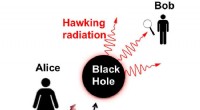
* Stephen Hawking (20th century): Made significant contributions to our understanding of black holes and the early universe.
21st Century:
* The discovery of the Higgs boson (2012): Confirmation of the Standard Model of particle physics.
* The development of gravitational wave detectors (2015): Opening a new window for observing the universe.
* Ongoing research in quantum computing, dark matter, and the nature of dark energy: Pushing the boundaries of our understanding.
Important Notes:
* This list is not exhaustive, and many other important events and discoveries in physics could be included.
* The history of physics is a complex and interconnected story, with many individuals and discoveries influencing one another.
* The field is constantly evolving, and new discoveries are made all the time.
This list provides a starting point for exploring the fascinating world of physics and its history. I encourage you to further research these events and scientists to gain a deeper understanding of the field's development.