Classical Physics
* Mechanics:
* Kinematics: Describes motion without considering the forces causing it. Includes concepts like displacement, velocity, and acceleration.
* Dynamics: Studies the relationship between forces and motion. Key concepts include Newton's Laws of Motion, work, energy, and momentum.
* Statics: Deals with objects at rest or in equilibrium.
* Fluid Mechanics: Focuses on the behavior of fluids (liquids and gases). Includes concepts like pressure, buoyancy, and viscosity.
* Continuum Mechanics: Studies the behavior of deformable materials (solids, liquids, and gases) under stress and strain.
* Electromagnetism:
* Electrostatics: Studies stationary charges and the forces they exert.
* Magnetostatics: Deals with stationary magnetic fields and their interactions with materials.
* Electrodynamics: Studies the interaction of electric and magnetic fields and their effects on moving charges.
* Thermodynamics:
* Heat: Deals with the transfer of energy as heat.
* Temperature: Measures the average kinetic energy of particles in a system.
* Entropy: Measures the randomness or disorder in a system.
* Optics: Studies the behavior of light and its interactions with matter.
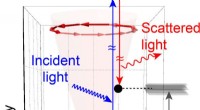
* Geometric Optics: Treats light as rays and uses principles of reflection and refraction to understand how light travels.
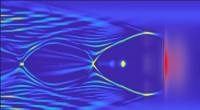
* Wave Optics: Describes light as a wave phenomenon and explains phenomena like diffraction and interference.
* Acoustics: Studies the production, transmission, and reception of sound waves.
* Relativity (Special Relativity): A theory by Einstein that deals with the relationship between space, time, and gravity.
Modern Physics
* Quantum Mechanics:
* Quantum Mechanics: Describes the behavior of matter at the atomic and subatomic level. Includes concepts like wave-particle duality, quantization of energy, and the uncertainty principle.
* Quantum Field Theory: Combines quantum mechanics with special relativity to describe the behavior of elementary particles and forces.
* Atomic Physics: Studies the structure, properties, and behavior of atoms.
* Nuclear Physics: Investigates the structure, properties, and interactions of atomic nuclei.
* Particle Physics (High-Energy Physics): Studies the fundamental particles and forces that make up the universe.
* Cosmology: Studies the origin, evolution, and structure of the universe as a whole.
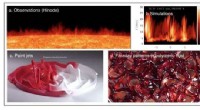
* Astrophysics: Applies physical principles to study celestial objects and phenomena, including stars, galaxies, and black holes.
Important Note: There's often overlap between these branches. For example, mechanics plays a role in both classical and modern physics.