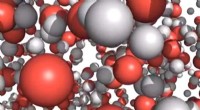
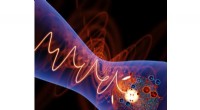
* Medium: A mechanical wave needs a medium to travel through. This medium can be a solid, liquid, or gas. Examples include:
* Sound waves travel through air, water, and solids.
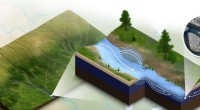
* Seismic waves (earthquakes) travel through the Earth's crust.
* Waves on a string travel along the string itself.
* Disturbance: The disturbance is a change in the medium, like a vibration or a compression. This change is what sets the wave in motion.
* For sound waves, the disturbance is a change in air pressure.
* For waves on a string, the disturbance is the string being pulled up or down.
* For seismic waves, the disturbance is the sudden movement of the Earth's crust.
How it works:
1. Initial Disturbance: Something creates the initial disturbance in the medium.
2. Energy Transfer: The disturbance causes particles in the medium to move, transferring energy to neighboring particles.
3. Wave Propagation: This energy transfer continues, causing a chain reaction of particle motion, creating the wave.
4. No Net Movement of Medium: The particles themselves don't travel with the wave; they oscillate around their equilibrium positions. It's the energy that travels.
Important Note: Mechanical waves cannot travel through a vacuum (like space). This is because there's no medium for the disturbance to travel through.