1. Contact Forces: These forces require direct physical contact between objects.
* Normal Force: The force exerted by a surface perpendicular to an object in contact with it. Think of a book resting on a table.
* Friction Force: The force that opposes motion between two surfaces in contact. This can be static (prevents motion) or kinetic (resists motion).
* Tension Force: The force transmitted through a string, rope, or cable when pulled taut. Think of pulling a weight with a rope.
* Applied Force: A force applied directly to an object by a person or another object.
* Air Resistance: A type of friction force that opposes the motion of an object through air.
2. Non-Contact Forces: These forces act on objects without direct physical contact.
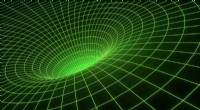
* Gravitational Force: The force of attraction between any two objects with mass. This is what keeps you on the ground!
* Electromagnetic Force: This encompasses both electric and magnetic forces.
* Electric Force: The force between charged objects.
* Magnetic Force: The force between magnets or between moving electric charges.
Important Notes:
* This is not an exhaustive list, and there are other ways to categorize forces. For example, you could classify forces based on their direction (like pushing or pulling).
* Forces are vectors, meaning they have both magnitude (strength) and direction.
* Newton's Laws of Motion describe how forces interact with objects to cause motion or changes in motion.
Let me know if you'd like more details on any specific type of force!