The Concept
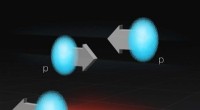
* Coulomb's Law: The force between two charged objects is directly proportional to the product of their charges and inversely proportional to the square of the distance between their centers.
Mathematical Representation
* F = k * (q1 * q2) / r²
* F: Force (in Newtons)
* k: Coulomb's constant (approximately 8.98755 × 10⁹ N⋅m²/C²)
* q1 and q2: Charges of the spheres (in Coulombs)
* r: Distance between the centers of the spheres (in meters)
Key Points
* Inverse Square Law: As the distance between the spheres increases, the force between them decreases rapidly. Doubling the distance reduces the force to one-fourth its original value.
* Attraction vs. Repulsion: If the spheres have charges of the same sign (both positive or both negative), the force is repulsive (they push each other apart). If they have opposite charges, the force is attractive (they pull each other together).
Example
Let's say you have two spheres:
* Sphere 1: Charge of +2 µC (micro Coulombs)
* Sphere 2: Charge of -3 µC
* Distance between their centers: 0.5 meters
To calculate the force between them:
1. Convert charges to Coulombs:
* +2 µC = 2 × 10⁻⁶ C
* -3 µC = -3 × 10⁻⁶ C
2. Plug the values into Coulomb's Law:
* F = (8.98755 × 10⁹ N⋅m²/C²) * (2 × 10⁻⁶ C) * (-3 × 10⁻⁶ C) / (0.5 m)²
3. Calculate: F = -0.2157 N (the negative sign indicates an attractive force)
Finding the Distance
If you know the force and the charges, you can rearrange Coulomb's Law to solve for the distance:
* r = √(k * (q1 * q2) / F)
In Summary
The distance between two charged spheres is a crucial factor determining the force of interaction between them. Understanding Coulomb's Law allows you to calculate the force or distance given the other parameters.