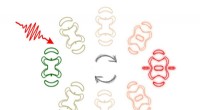
* Composition: The atomic nucleus is made up of protons and neutrons, collectively known as nucleons. Protons have a positive charge, while neutrons are neutral.
* Size: The nucleus is incredibly small compared to the overall size of an atom. Imagine an atom as a large stadium, and the nucleus would be like a marble in the center.
* Strong Force: The nucleons are bound together by the strong nuclear force, which is the strongest force in nature. This force overcomes the electrostatic repulsion between the protons.
* Atomic Number and Mass Number: The number of protons in the nucleus determines the element's atomic number, which defines its chemical identity. The total number of protons and neutrons is the mass number.
* Isotopes: Atoms of the same element can have different numbers of neutrons, leading to isotopes. Isotopes of an element have the same atomic number but different mass numbers.
* Nuclear Reactions: The nucleus is involved in various nuclear reactions, such as radioactive decay, nuclear fission, and nuclear fusion. These reactions can release vast amounts of energy.
Beyond the Atomic Nucleus:
While the term "nucleus" is primarily associated with atomic nuclei, it can also be used in other contexts in physics:
* Nuclear Physics: The study of atomic nuclei, their structure, and their behavior.
* Nuclear Astrophysics: The study of the role of nuclear reactions in astrophysical processes, such as stellar evolution and the formation of elements.
Therefore, when you hear "nucleus" in physics, the most likely interpretation is the atomic nucleus. However, it's always helpful to consider the context to ensure you understand the specific meaning.