Here's why:
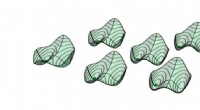
* Mechanical waves require a medium to travel. This means they need a substance (like air, water, or a solid) to propagate.
* The particles of the medium vibrate or oscillate. These vibrations transfer energy through the medium, but the particles themselves don't travel long distances.
* Examples of mechanical waves: Sound waves, water waves, seismic waves (earthquakes)
In contrast:
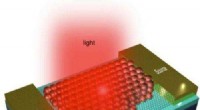
* Electromagnetic waves do not require a medium to travel. They can propagate through a vacuum (like space). Examples include light, radio waves, and X-rays.