The Basics:
* Light travels at different speeds in different mediums. It travels fastest in a vacuum (like space), slower in air, and even slower in water or glass.
* The speed of light depends on the optical density of the medium. A denser medium (like water) has more particles packed together, which slows down the light waves.
How Refraction Happens:
1. Imagine a light wave hitting a boundary between two mediums (like air and water). Part of the wave is reflected, but part enters the new medium.
2. The light wave slows down or speeds up as it enters the new medium. This change in speed is key.
3. The change in speed causes the direction of the light wave to change. This change in direction is called refraction.
Think of a car driving from pavement onto grass. The car slows down, and its path changes slightly, causing the car to turn.
Snell's Law:
The amount of bending is described by Snell's Law:
n₁sinθ₁ = n₂sinθ₂
Where:
* n₁ and n₂ are the refractive indices of the two mediums (measuring how much light bends in each).
* θ₁ and θ₂ are the angles of incidence and refraction, respectively.
Examples:
* A straw in a glass of water appears bent. This is because light from the straw travels through water (slower) and then air (faster), causing it to bend.
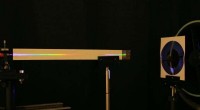
* A prism separates white light into a rainbow. Each color of light has a slightly different wavelength, meaning it bends at a slightly different angle in the prism.
In Conclusion:
Refraction is a fundamental phenomenon that explains why light behaves the way it does when passing through different mediums. This bending of light is essential for many applications, from lenses in our eyes and cameras to the design of optical fibers.