Similarities:
* Both are non-contact forces: They act on objects without requiring direct physical contact.
* Both are inverse-square laws: The strength of the force decreases with the square of the distance between the objects. This means that if you double the distance between two objects, the force between them becomes four times weaker.
* Both can be attractive or repulsive: Gravity is always attractive, pulling objects together. Magnetic forces can be attractive or repulsive depending on the orientation of the magnetic poles.
Differences:
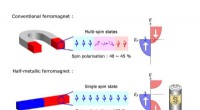
* Source of the force: Gravity is a force that arises from mass. Every object with mass exerts a gravitational force on every other object with mass. Magnetic force arises from moving electric charges. These charges can create a magnetic field, which then interacts with other magnetic fields or moving charges.
* Strength of the force: Gravity is a much weaker force than magnetism. However, because it acts on all matter, its cumulative effect over large distances is significant. Magnetic forces are much stronger but act only on specific materials or charged particles.
* Range: Gravity has an infinite range, although its strength weakens significantly over long distances. Magnetic forces have a limited range, but this range can be significantly extended through the use of electromagnets.
In summary:
Both gravity and magnetism are fundamental forces that play essential roles in the universe. While they share some similarities, they also have significant differences in their origins, strength, and range. Understanding these differences is crucial for understanding the diverse interactions that shape the universe around us.