1. Laser Emission: The speed gun emits a beam of laser light towards the moving car.
2. Reflection: The light bounces off the car's surface and returns to the speed gun.
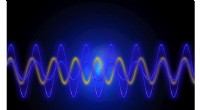
3. Frequency Shift: If the car is moving towards the speed gun, the reflected light waves are compressed, resulting in a higher frequency. Conversely, if the car is moving away, the reflected light waves are stretched, leading to a lower frequency. This change in frequency is known as the Doppler shift.
4. Measurement: The speed gun measures the difference in frequency between the emitted and reflected light waves. This difference is directly proportional to the car's speed.
5. Calculation: The speed gun uses this frequency difference to calculate the car's speed using a simple formula that takes into account the speed of light and the Doppler shift.
Here's a simplified explanation:
Think of the laser beam as a sound wave. When a car approaches you, the sound of its engine seems higher pitched (higher frequency). This is because the sound waves are compressed. When the car moves away, the sound seems lower pitched (lower frequency) because the waves are stretched.
The same principle applies to light waves. The speed gun uses the frequency shift of the reflected laser light to determine the car's speed.
Advantages of Laser Speed Guns:
* Accuracy: Laser speed guns offer highly accurate speed measurements.
* Remote Operation: They can measure speeds from a distance, without requiring the car to pass through a specific point.
* Instantaneous Measurement: They provide an instantaneous reading of the car's speed at the moment the laser beam is reflected.
Note: Modern speed guns often utilize infrared or microwave technology instead of lasers, but the underlying principle of the Doppler effect remains the same.