Key Concepts
* Frequency: The number of wave cycles (crests or troughs) passing a point per second. Measured in Hertz (Hz).
* Wavelength: The distance between two consecutive crests or troughs of a wave.
* Speed: How fast a wave travels through a medium.
The Relationship:
* Speed = Frequency x Wavelength
What Happens When Two Waves Have the Same Frequency But Different Speeds?
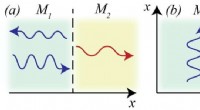
* Different Wavelengths: Since the frequency is the same, the wave with the higher speed will have a longer wavelength. This is because the higher speed allows the wave to cover more distance in the same amount of time.
Example
Imagine two waves with a frequency of 10 Hz.
* Wave A: Speed = 20 m/s, Wavelength = 2 meters (Speed / Frequency = Wavelength)
* Wave B: Speed = 30 m/s, Wavelength = 3 meters (Speed / Frequency = Wavelength)
In Conclusion
If two waves have the same frequency but different speeds:
* The faster wave will have a longer wavelength.
* They will both complete the same number of cycles per second (frequency is the same).
* The faster wave will travel a greater distance in a given amount of time.