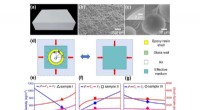
* Fixed Positions: The particles in a solid are held together by strong intermolecular forces. These forces keep the particles in a fixed, rigid arrangement.
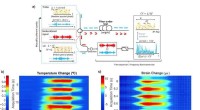
* Vibrational Motion: While the particles don't move freely from their positions, they do vibrate about their fixed points. The amount of vibration depends on the temperature. Higher temperatures mean more energetic vibrations.
Important Note: While solids are primarily characterized by vibrational motion, they can also exhibit some limited forms of motion:
* Thermal Expansion: Solids expand when heated, meaning the particles vibrate with greater amplitude and move slightly further apart.
* Diffusion: Over very long periods, particles in a solid can slowly diffuse or move through the solid structure.
* Crystal Lattice Vibrations: In crystalline solids, vibrations can occur in a coordinated way throughout the entire lattice structure, creating phenomena like sound waves.
In summary: Solids primarily exhibit vibrational motion, with limited movement of particles from their fixed positions.