Classical Theory Prediction:
* Intensity: According to classical wave theory, the energy of light is directly proportional to its intensity. Therefore, increasing the intensity of light should lead to an increase in the kinetic energy of emitted electrons.
* Frequency: The frequency of the light should have no effect on the kinetic energy of the emitted electrons, as long as the intensity is kept constant.
Experimental Observations:
* Intensity: Experiments showed that increasing the intensity of light only increases the number of emitted electrons, not their kinetic energy.
* Frequency: It was observed that increasing the frequency of light increased the kinetic energy of the emitted electrons, regardless of the intensity.
* Threshold Frequency: There was a minimum frequency (threshold frequency) below which no electrons were emitted, even with very high intensity light.
The Problem:
Classical wave theory cannot explain these observations. It predicts that the energy of light is distributed continuously over the wavefront, and therefore, any intensity of light should be able to knock electrons out of the metal. It also predicts that the kinetic energy of electrons should depend only on the intensity of the light, not its frequency.
Conclusion:
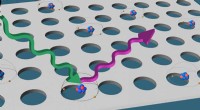
The failure of classical wave theory to explain the photoelectric effect led to the development of the quantum theory of light, which posits that light exists in discrete packets of energy called photons. The energy of each photon is directly proportional to the frequency of the light (E = hν, where h is Planck's constant and ν is the frequency). This theory successfully explains the photoelectric effect:
* Threshold Frequency: The existence of a threshold frequency is explained by the fact that a minimum amount of energy (hν) is required to overcome the work function of the metal and eject an electron.
* Kinetic Energy: The kinetic energy of the emitted electrons is directly proportional to the frequency of the light, as the energy of each photon is directly proportional to the frequency.
* Intensity: Increasing the intensity of light simply increases the number of photons incident on the metal, leading to more electrons being ejected.
Therefore, the photoelectric effect is strong evidence for the quantization of light and cannot be explained by the classical wave theory.