* Theories are not enough: Physics aims to understand the fundamental laws governing the universe. While we can develop mathematical models and theories to explain phenomena, these theories are only as good as their ability to predict real-world observations.
* Experiments provide evidence: Experiments allow physicists to create controlled situations where they can test their theories and observe the outcomes. The results of these experiments then provide evidence to support or refute the theory.
* Iterative process: Physics is a constantly evolving field. Experiments often lead to new discoveries or observations that challenge existing theories. This leads to the development of new or revised theories, which in turn need to be tested through further experiments. This cycle of experimentation and theory refinement is what drives progress in physics.
Examples of experimental science in physics:
* Galileo's experiments: Galileo's experiments with falling objects and inclined planes provided crucial evidence for the laws of motion.
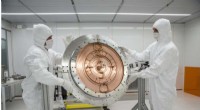
* CERN's Large Hadron Collider: This massive particle accelerator allows physicists to recreate conditions similar to those found in the early universe, testing theories about the fundamental particles and forces.
* Observational astronomy: Astronomers use telescopes to observe distant objects, collecting data that helps us understand the evolution of the universe and the nature of stars, galaxies, and other celestial objects.
In summary:
* Physics is experimental because it relies on observation and experimentation to test and refine its theories.
* Experiments provide evidence to support or refute theories, driving the iterative process of scientific discovery.
* The history of physics is filled with examples of experiments that have led to revolutionary breakthroughs in our understanding of the universe.