The Role of Gravity and Velocity
* Gravity: Earth's gravity pulls objects towards its center. This pull is what causes projectiles to follow a curved path.
* Velocity: The horizontal velocity of the projectile determines how far it travels before gravity significantly pulls it down.
The Critical Velocity
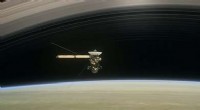
* Orbital Velocity: To orbit the Earth, a projectile needs to achieve a specific horizontal velocity called the orbital velocity. This velocity is high enough to constantly "fall" around the Earth, matching its curvature.
* 8 km/s: 8 km/s is close to Earth's orbital velocity, which is approximately 7.9 km/s at the surface.
Why 8 km/s May Not Be Enough
* Air Resistance: In reality, air resistance significantly affects projectiles at high speeds. This drag force would slow the projectile down, preventing it from maintaining the required orbital velocity.
* Altitude: 8 km/s is the orbital velocity at the surface. If the projectile is launched at a higher altitude, the required orbital velocity would be lower.
The Bottom Line
While a projectile launched horizontally at 8 km/s is close to the orbital velocity, it likely wouldn't be able to maintain that velocity for long due to air resistance. To achieve a true orbital path, the projectile would need to be launched at a higher altitude, where the required orbital velocity is lower, and in a vacuum to minimize air resistance.