* Light carries momentum: Light, though massless, carries momentum. This means when light strikes an object, it exerts a very small force. This force is called radiation pressure.
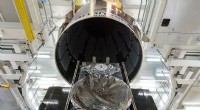
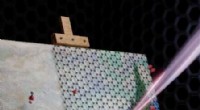
* Radiation pressure is incredibly weak: The force from light is extremely small, especially in everyday situations. Imagine a solar sail in space – it's designed to capture as much light as possible to get a tiny push.
* Mass vs. Weight:
* Mass is the amount of matter in an object, a fundamental property that doesn't change.
* Weight is the force of gravity acting on an object's mass.
Therefore, while light does exert a force, it's negligible for everyday objects and doesn't noticeably affect their mass or weight.
However, in specific scenarios like:
* Tiny particles: Light can have a significant effect on very small particles like dust grains in space.
* Extremely high intensity light: In scenarios with incredibly intense light, like inside a laser, the radiation pressure can be substantial.
These are exceptional cases, and in general, light's effect on mass and weight is not something we need to consider in our daily lives.