Here's why:
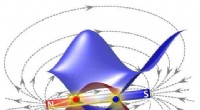
* Resonance is the phenomenon where an object vibrates with maximum amplitude when driven by an external force at its natural frequency.
* Natural frequency is the frequency at which an object naturally vibrates when disturbed.
Scenario:
Imagine two tuning forks with the same frequency. If you strike one tuning fork, it will vibrate at its natural frequency. If you bring the vibrating tuning fork close to the second tuning fork, the sound waves from the first will cause the second tuning fork to vibrate as well.
Since both tuning forks have the same natural frequency, the vibrations from the first tuning fork will match the natural frequency of the second tuning fork. This matching of frequencies will cause the second tuning fork to resonate, leading to a noticeable increase in its amplitude of vibration.
Key points:
* Same frequency is necessary: Resonance can only occur when the driving frequency (of the first object) matches the natural frequency of the second object.
* Amplitude increase: Resonance is characterized by a significant increase in the amplitude of vibration of the second object.
Examples:
* Swinging: If you push a swing at its natural frequency, it will swing higher and higher.
* Musical instruments: The resonance of the soundboard in a guitar amplifies the vibrations of the strings, creating a louder sound.
* Bridges: The Tacoma Narrows Bridge collapsed due to resonance caused by wind gusts matching the bridge's natural frequency.
Let me know if you'd like to explore any of these examples in more detail!