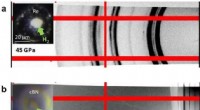
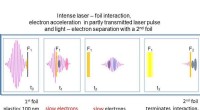
* Diffraction occurs when a wave encounters an obstacle or passes through an opening that's comparable in size to its wavelength. The wave bends around the obstacle or opening, spreading out into the region behind it.
* Refraction occurs when a wave changes speed as it moves from one medium to another. The change in speed causes the wave to bend at the boundary between the two media.
Here's the breakdown:
* Diffraction is related to the wave's interaction with its surroundings (obstacles, openings).
* Refraction is related to the wave's interaction with different materials (media).
While it's true that a wave can change speed when it enters a new medium, that's not the reason for diffraction. Diffraction happens because of the wave's tendency to spread out as it passes by obstacles or through openings.
Example:
* Diffraction: Light waves diffract when passing through a narrow slit, resulting in an interference pattern on a screen behind the slit.
* Refraction: Light waves refract when passing from air to water, causing a straw in a glass of water to appear bent.
In summary:
* Diffraction is the bending of waves around obstacles or through openings.
* Refraction is the bending of waves when they change speed due to entering a different medium.