Here's why this was a key observation:
* Classical Physics' Prediction: Classical physics, based on the wave theory of light, predicted that increasing the intensity of light would increase the energy of the emitted electrons. This is because a more intense wave would be expected to impart more energy to the electrons.
* Experimental Observation: However, experiments showed that the kinetic energy of the emitted electrons depended only on the frequency of the light, not its intensity. Increasing the intensity only increased the number of electrons emitted, not their individual energy.
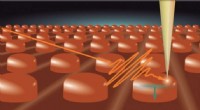
* Einstein's Explanation: Einstein explained this surprising observation by proposing that light is not just a wave, but also consists of discrete packets of energy called photons. The energy of each photon is proportional to its frequency. When a photon strikes a metal surface, it can transfer all of its energy to an electron, ejecting it from the metal. The energy of the ejected electron is then equal to the energy of the photon minus the work function of the metal (the minimum energy required to remove an electron).
* The Photon's Role: This explained why the kinetic energy of the electrons depended on the frequency of light (higher frequency photons have more energy) and not the intensity (more photons just mean more electrons being ejected, not more energy per electron).
Einstein's groundbreaking explanation of the photoelectric effect was a significant step in the development of quantum theory and earned him the Nobel Prize in Physics in 1921.