1. Quantum Mechanics: This branch deals with the behavior of matter and energy at the atomic and subatomic levels. It explores concepts like wave-particle duality, quantization of energy, and the uncertainty principle.
2. Relativity: This branch, divided into Special Relativity and General Relativity, focuses on the relationship between space, time, gravity, and the motion of objects at very high speeds. Key concepts include time dilation, length contraction, and the bending of spacetime.
3. Nuclear Physics: This branch focuses on the structure, properties, and interactions of atomic nuclei. It explores topics like radioactivity, nuclear fusion and fission, and the development of nuclear weapons and nuclear energy.
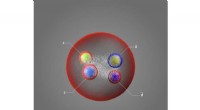
4. Particle Physics (High-Energy Physics): This branch studies the fundamental building blocks of matter (elementary particles) and the forces that govern their interactions. It uses powerful particle accelerators to create and analyze these particles.
5. Astrophysics: This branch combines physics and astronomy to study celestial objects and phenomena, such as stars, galaxies, and black holes. It uses principles of physics to explain the origin, evolution, and properties of these cosmic entities.
These are just some of the many branches of modern physics. Other important areas include condensed matter physics, biophysics, and plasma physics.