Sound waves work similarly. Instead of dominoes, we have air particles. Here's how it works:
1. Sound Source: A sound source, like a speaker or a drum, creates a vibration. This vibration causes the air particles near the source to move back and forth.
2. Compression: When the source pushes out, the air particles are compressed together, forming a region of high pressure.
3. Rarefaction: When the source pulls back, the air particles are spread out, forming a region of low pressure.
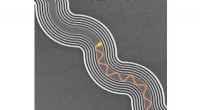
4. Wave Propagation: These regions of high and low pressure alternate, creating a wave that travels outward from the source. The air particles themselves don't travel far, but they transfer energy to their neighbors, causing them to vibrate.
5. Direction of Travel: The direction of the sound wave is the same direction that the compressions and rarefactions travel. Imagine a line of air particles, and the sound wave moves along that line, like the domino effect.
Important Note: The air particles oscillate back and forth *parallel* to the direction the sound wave travels. This is why sound waves are classified as longitudinal waves.
Here's a visual analogy:
* Think of a spring: If you push one end of a spring, the compression travels down the spring. The coils of the spring move back and forth, but the compression itself travels in a straight line. The sound wave is like this compression, and the air particles are like the coils.
Key Takeaways:
* Sound waves are caused by vibrations that create alternating regions of high and low pressure in the air.
* Air particles themselves don't travel far, but they transfer energy to their neighbors.
* The direction of the sound wave is the same as the direction of the compressions and rarefactions.
* The motion of air particles is parallel to the direction of sound wave propagation, making sound waves longitudinal.