Here's how it works:
* The Ionosphere: The Earth's atmosphere has a layer called the ionosphere, located roughly 50-400 kilometers above the surface. This layer contains a high concentration of charged particles (ions and electrons) created by solar radiation.
* Reflection: When radio waves hit the ionosphere at a specific angle, they are reflected back towards Earth. This is similar to how light reflects off a mirror.
* Long-Distance Transmission: The reflected radio waves can travel back down to the Earth, effectively bouncing off the ionosphere and reaching distant locations. This allows for radio communication over long distances.
While the charged particles in the ionosphere are crucial for this process, it's not a simple bouncing-off effect. The interaction between the radio waves and the charged particles is more complex, involving refraction and changes in wave propagation direction.
Here are some key things to note:
* The reflection of radio waves off the ionosphere depends on the frequency of the radio waves and the density of charged particles in the ionosphere.
* Different frequencies of radio waves interact with the ionosphere differently. Some frequencies are reflected more easily, while others can pass through.
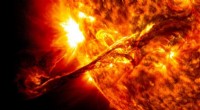
* The ionosphere's density varies depending on the time of day, season, and solar activity, which affects the reflection of radio waves.
Therefore, while charged particles in the ionosphere play a significant role, it's the reflection of radio waves, not simple bouncing, that allows them to travel long distances.