* Classical Physics: This encompasses the fundamental laws of physics that were developed before the beginning of the 20th century. It includes areas like:
* Mechanics: The study of motion and its causes (including kinematics, dynamics, statics, and fluid mechanics).
* Thermodynamics: The study of heat and its relationship to energy and work.
* Electromagnetism: The study of electric and magnetic fields and their interaction.
* Optics: The study of light and its behavior.
* Acoustics: The study of sound and its behavior.
* Modern Physics: This refers to the physics developed in the 20th century and beyond. It's largely based on the concepts of quantum mechanics and relativity. It includes areas like:
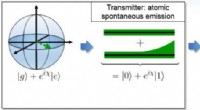
* Quantum mechanics: The study of the behavior of matter and energy at the atomic and subatomic level.
* Relativity: The study of the relationship between space, time, gravity, and motion.
* Nuclear physics: The study of the structure, properties, and reactions of atomic nuclei.
* Particle physics: The study of the fundamental particles of matter and their interactions.
* Astrophysics: The study of the physical properties and evolution of celestial objects.
* Cosmology: The study of the origin, evolution, and large-scale structure of the universe.
While these are the two main branches, it's important to note that physics is a vast and interconnected field. Many areas of physics draw from both classical and modern concepts.