Reductionism in physics is the idea that complex phenomena can be understood by breaking them down into their simpler, fundamental components. It's like taking apart a complex machine to understand how each individual part works, and how those parts interact to make the machine function.
Here's how it works in practice:
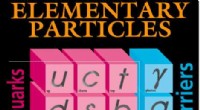
* Identifying the fundamental building blocks: This might involve identifying the elementary particles (like quarks and electrons) or the fundamental forces (like gravity and electromagnetism).
* Explaining complex phenomena in terms of these fundamentals: For example, understanding the behavior of atoms in terms of the interactions between their constituent protons, neutrons, and electrons.
Key Points:
* Not a complete explanation: Reductionism doesn't necessarily tell us everything about a phenomenon. It might explain the "how" but not the "why" or the "what it means". For example, it can explain how water molecules interact, but not why water is essential for life.
* Emergent properties: Complex systems often display properties that are not present in their individual components. For example, the properties of a living organism are not simply the sum of the properties of its cells.
* Continuum vs. Discrete: Some physicists believe that all physical phenomena are ultimately continuous (described by smooth functions), while others believe that they are fundamentally discrete (described by individual units or quanta).
Examples:
* Newtonian mechanics: Reducing the motion of objects to forces and masses.
* Quantum mechanics: Understanding the behavior of atoms and molecules in terms of their quantum states.
* Standard Model of particle physics: Describing the fundamental particles and forces of the universe.
Challenges:
* Complexity: The complexity of many systems makes them difficult to fully understand through reductionism alone.
* Limits of knowledge: We may not yet know all the fundamental building blocks of the universe.
* Philosophical questions: The implications of reductionism for our understanding of consciousness and free will are still debated.
In summary, reductionism is a powerful tool in physics, but it has its limitations and should not be seen as the only way to understand the universe. It's crucial to remember that complex systems often exhibit emergent properties that cannot be fully explained by their individual components.