Both terms might seem similar, but they describe distinct motions within a wave. Here's a clear distinction:
1. Wave Velocity:
* Definition: This refers to the speed at which the wave itself propagates through the medium. It's the rate at which the disturbance travels.
* Direction: It's the direction in which the wave front moves.
* Example: Imagine a ripple spreading on a pond. The wave velocity is how fast the ripple moves outward from its origin.
2. Particle Velocity:
* Definition: This refers to the speed and direction of individual particles within the medium as they oscillate due to the wave's passage.
* Direction: It's the direction in which the particles themselves are moving.
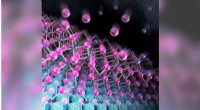
* Example: In the pond ripple example, the water molecules on the surface don't travel across the pond with the wave. They oscillate up and down or in a circular motion as the wave passes. This is the particle velocity.
Key Differences:
* Medium: Wave velocity depends on the medium's properties, while particle velocity depends on the wave's amplitude and frequency.
* Movement: The wave itself moves, while particles oscillate around their equilibrium position.
* Speed: Wave velocity is usually much faster than particle velocity.
Relationship:
While they are distinct, wave velocity and particle velocity are related. The speed of the wave is affected by the speed of the particles within the medium, although not directly proportional.
Here's an analogy:
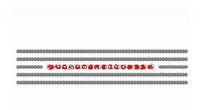
Imagine a line of people standing close together. If you push the first person, they bump into the next, creating a wave of movement down the line. The wave velocity is how fast the push travels down the line. The particle velocity is how fast each person moves back and forth as the wave passes.
In summary: Wave velocity is the speed of the wave, while particle velocity is the speed of the particles within the medium as the wave passes through it.