What Mechanical Waves Are:
* Require a Medium: Mechanical waves are disturbances that travel through a medium (like air, water, or a solid) by transferring energy from one particle to the next. They cannot travel through a vacuum.
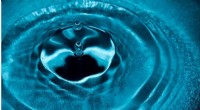
* Energy Transfer: They transfer energy but not matter. Think of a ripple on a pond—the water itself doesn't travel far, but the energy of the wave does.
* Types: There are two main types:
* Transverse waves: The particles in the medium oscillate perpendicular to the direction the wave travels (like a wave on a string).
* Longitudinal waves: The particles in the medium oscillate parallel to the direction the wave travels (like sound waves).
Key Characteristics:
* Amplitude: The maximum displacement of a particle from its rest position.
* Wavelength: The distance between two successive crests or troughs (for transverse waves) or compressions or rarefactions (for longitudinal waves).
* Frequency: The number of waves passing a point per unit time (usually measured in Hertz, Hz).
* Speed: The speed at which the wave travels through the medium.
Some Examples:
* Sound waves: Longitudinal waves that travel through air, water, and solids.
* Water waves: A combination of transverse and longitudinal waves.
* Seismic waves: Waves that travel through the Earth's crust after an earthquake.
What's NOT True:
* Do not travel through a vacuum: Unlike electromagnetic waves (like light), mechanical waves need a medium to travel.
* Do not transport matter: The medium itself doesn't move along with the wave; it's the energy that travels.
Let me know if you have any more specific questions about mechanical waves!