1. Flow Rate: This is the volume of fluid passing a point in the pipe per unit time (e.g., liters per minute, gallons per hour). A higher flow rate generally means a higher velocity.
2. Pipe Cross-Sectional Area: A narrower pipe will force the fluid to move faster to maintain the same flow rate. This is described by the Continuity Equation:
* Q = A * v
* Q = Flow rate
* A = Cross-sectional area of the pipe
* v = Flow velocity
3. Fluid Properties: Different fluids have different viscosities (resistance to flow). A thicker, more viscous fluid will generally flow slower than a thinner, less viscous fluid.
4. Pressure Gradient: The difference in pressure between the beginning and end of the pipe influences flow velocity. A steeper pressure gradient means a faster flow.
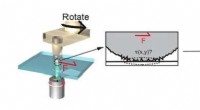
5. Friction: The roughness of the pipe's inner surface causes friction, slowing the fluid down.
Calculating Flow Velocity:
To calculate flow velocity (v), you can use the following formula:
* v = Q / A
Example:
If a pipe with a cross-sectional area of 0.01 square meters has a flow rate of 0.05 cubic meters per second, then the flow velocity would be:
* v = 0.05 m³/s / 0.01 m² = 5 meters per second
Important Considerations:
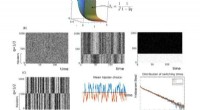
* Flow Profile: The flow velocity is not uniform across the pipe's cross-section. It's typically highest in the center and decreases towards the walls due to friction.
* Turbulent vs. Laminar Flow: At higher velocities, the flow can become turbulent, making the flow velocity more complex to calculate.
Let me know if you have a specific scenario in mind. I can help you with the calculations!