General Gravitational Acceleration
* Magnitude: The magnitude of gravitational acceleration is denoted by 'g' and is approximately 9.81 m/s² near the Earth's surface. This means that for every second an object falls freely, its downward velocity increases by 9.81 meters per second.
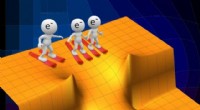
* Direction: The direction of gravitational acceleration is always towards the center of the mass that is creating the gravitational field. For an object on Earth, this means downward, towards the Earth's center.
Important Points:
* Variation with Altitude: The value of 'g' decreases as you move further away from the Earth's surface. This is because the gravitational force decreases with distance.
* Variation with Latitude: The value of 'g' also varies slightly with latitude due to the Earth's rotation and the fact that the Earth is not a perfect sphere.
* Other Celestial Bodies: The gravitational acceleration on other planets or celestial bodies will be different depending on their mass and radius.
Specific Example: Earth
On Earth, the gravitational acceleration is approximately 9.81 m/s² near the surface. This is an average value, and it can vary slightly depending on factors like latitude and altitude.
In Summary:
The magnitude and direction of gravitational acceleration are determined by the mass of the object creating the gravitational field and the distance from that object. While the value of 'g' near the Earth's surface is approximately 9.81 m/s², it can change based on location. The direction is always towards the center of the mass.