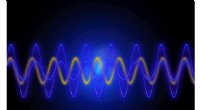
Understanding Phase Velocity vs. Group Velocity
* Phase velocity describes the speed at which a particular phase of the electromagnetic wave (e.g., the crest) propagates. It's calculated as the ratio of the frequency (f) to the wave number (k):
```
v_p = f/k
```
* Group velocity describes the speed at which the overall envelope of the wave, containing its energy, propagates. It's the speed at which information travels.
Waveguides and Dispersion
Waveguides are structures that confine electromagnetic waves. Inside a waveguide, the wave is guided by the boundaries of the structure, which leads to dispersion. Dispersion means that the wave's phase velocity changes with frequency.
The Paradox Explained
In a waveguide, it's possible for the phase velocity to exceed the speed of light because the phase velocity is a result of the interaction of the wave with the waveguide's boundaries. It's not a measure of the actual speed of information traveling through the waveguide.
* The group velocity is always less than or equal to the speed of light, ensuring that information does not travel faster than the speed of light.
Think of it like this:
Imagine a wave traveling down a rope. The wave's shape might move very quickly, but the rope itself doesn't travel that fast. The phase velocity is like the speed of the wave's shape, while the group velocity is like the speed of the rope itself.
Key Points
* Phase velocity exceeding the speed of light in a waveguide is a consequence of dispersion and the interaction between the wave and the waveguide structure.
* It does not violate special relativity because the group velocity, which represents the speed of information, remains below the speed of light.
* The phase velocity can be misleading because it doesn't represent the actual speed of the information traveling through the waveguide.
Let me know if you would like more details or examples!