Everyday Vacuum: In everyday language, a vacuum refers to an empty space, devoid of anything. This is the kind of vacuum we think of when we talk about a vacuum cleaner, which sucks up air and dust.
Physics Vacuum: In physics, a vacuum is not completely empty. It is the state of lowest possible energy for a given system. This means:
* No particles: It is devoid of matter particles like atoms and molecules.
* Zero pressure: There is no pressure due to the absence of particles.
* No sound: Sound waves cannot travel through a vacuum as they require a medium to propagate.
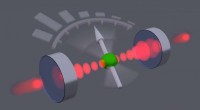
* Not truly empty: Even in a "perfect" vacuum, there are still fluctuations in the quantum fields, which lead to the spontaneous creation and annihilation of virtual particles. This is due to the uncertainty principle, which allows for these temporary fluctuations in the vacuum energy.
Types of Vacuums:
* Classical vacuum: The ideal vacuum used in classical physics, where there are no particles or fields.
* Quantum vacuum: The vacuum described by quantum mechanics, where fluctuations in quantum fields are present.
* Perfect vacuum: A theoretical vacuum without any particles or fields, which is impossible to achieve in reality.
Importance of Vacuum in Physics:
* Understanding fundamental forces: Studying the properties of the vacuum helps us understand the nature of fundamental forces like gravity and the electroweak force.
* Particle physics research: Experiments like the Large Hadron Collider use vacuum chambers to study particles and their interactions.
* Technological applications: Vacuum technology is essential in many applications, including electronics, space exploration, and medical devices.
In summary, physicists use "vacuum" to describe a state of lowest energy, which is not completely empty but still devoid of ordinary matter particles. It is a concept that is fundamental to our understanding of the universe at the smallest scales.