Specifically, the type of particle accelerator used to make larger nuclei is a heavy ion accelerator. Here's how it works:
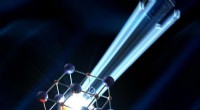
* Accelerating Particles: Heavy ion accelerators use powerful electromagnetic fields to accelerate atomic nuclei (ions) to very high speeds, close to the speed of light.
* Smashing into Targets: These high-speed nuclei are then directed at a target, which can be another heavy nucleus or a special material.
* Nuclear Fusion: When the accelerated nuclei collide with the target, they can fuse together, forming larger nuclei. This process is called nuclear fusion.
Examples of heavy ion accelerators include:
* The Relativistic Heavy Ion Collider (RHIC) at Brookhaven National Laboratory in the US: This accelerator collides gold ions at extremely high energies, allowing scientists to study the state of matter known as quark-gluon plasma.
* The Large Hadron Collider (LHC) at CERN in Switzerland: While primarily used for high-energy physics, the LHC can also be used to collide heavy ions like lead nuclei.
Importance of Heavy Ion Accelerators:
Heavy ion accelerators are essential for research in nuclear physics, allowing scientists to:
* Study the fundamental forces that hold nuclei together.
* Explore the properties of exotic nuclei, which are unstable and rarely found in nature.
* Simulate the conditions that existed in the early universe.
These powerful machines are crucial for our understanding of the universe at its most fundamental level.