1. Classical Mechanics: Deals with the motion of macroscopic objects (from everyday objects to planets) under the influence of forces. It includes topics like:
* Kinematics: Describing motion
* Dynamics: Relating forces to motion
* Rotational motion
* Simple harmonic motion
* Conservation laws (energy, momentum)
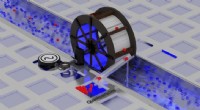
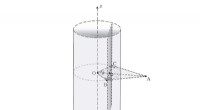
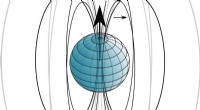
2. Electromagnetism: Studies the interaction of electric and magnetic fields, encompassing topics like:
* Electrostatics: Charges at rest
* Electrodynamics: Charges in motion
* Magnetism
* Maxwell's equations
* Light as an electromagnetic wave
3. Thermodynamics: Focuses on heat, work, temperature, and energy transfer in physical systems, including:
* Laws of thermodynamics
* Heat transfer (conduction, convection, radiation)
* Entropy
* Statistical mechanics
4. Quantum Mechanics: Describes the behavior of matter and energy at the atomic and subatomic levels. Key topics include:
* Wave-particle duality
* Atomic structure
* Quantum field theory
* Quantum computing
5. Relativity: Deals with the relationship between space, time, gravity, and motion, divided into:
* Special relativity: Describing motion at very high speeds
* General relativity: Explaining gravity as a curvature of spacetime
6. Nuclear Physics: Studies the structure, properties, and interactions of atomic nuclei, including:
* Radioactivity
* Nuclear reactions
* Nuclear fission and fusion
* Particle physics
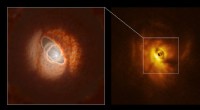
Remember, these are broad categories, and many subfields overlap and intertwine. For example, "Astrophysics" combines concepts from classical mechanics, relativity, and thermodynamics to understand celestial objects.