Here's a breakdown:
* Waves: Diffraction is a phenomenon that applies to all types of waves, including light waves, sound waves, water waves, and even matter waves (like electrons).
* Obstacle or Opening: This could be a small slit, a narrow aperture, a pinhole, a grating, or even the edge of a solid object.
* Comparable or Smaller Size: The key is that the size of the obstacle or opening needs to be similar to or smaller than the wavelength of the wave. If the opening is much larger than the wavelength, the wave will mostly pass through without significant diffraction.
Why does diffraction happen?
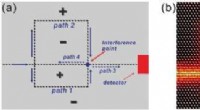
When a wave encounters an obstacle or opening, it bends around the edges and spreads out. This bending and spreading is due to the wave nature of light, where each point on the wavefront acts as a secondary source of waves. These secondary waves interfere with each other, creating a pattern of bright and dark fringes on a screen behind the obstacle.
Examples of Diffraction:
* Light diffracting through a narrow slit: This creates a pattern of bright and dark bands called "interference fringes" on a screen behind the slit.
* Sound diffracting around a corner: This allows you to hear someone talking even if they are hidden around a corner.
* Water waves diffracting through an opening in a breakwater: The waves spread out after passing through the opening.
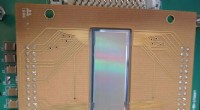
* X-ray diffraction: This is used to study the crystal structure of materials.
In summary: Diffraction is a fundamental wave phenomenon that occurs when waves encounter obstacles or openings comparable to or smaller than their wavelength, causing the waves to bend and spread out.