Basic Quantities:
* Distance/Displacement: How far an object has moved (distance) or its change in position (displacement). Measured in units like meters (m), kilometers (km), etc.
* Time: How long the motion takes. Measured in seconds (s), minutes (min), hours (h), etc.
* Speed/Velocity: How fast an object is moving (speed) or its rate of change of position with direction (velocity). Measured in meters per second (m/s), kilometers per hour (km/h), etc.
* Acceleration: The rate at which an object's velocity changes. Measured in meters per second squared (m/s²).
Tools and Techniques:
* Stopwatch: Measures the time taken for a motion to occur.
* Rulers, Meter Sticks, Tape Measures: Used to measure distance or displacement.
* Speedometers: Measure instantaneous speed of vehicles.
* Motion Sensors: These use technologies like sonar, laser, or radar to detect and measure distance and velocity of an object.
* Accelerometers: Measure acceleration, often found in smartphones and other devices.
* Video Analysis: Using video recordings, we can analyze the motion of an object by tracking its position over time.
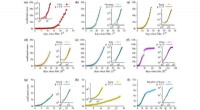
* Graphs: Plotting distance, speed, or acceleration against time allows us to visually analyze and understand motion.
Beyond Basic Measurements:
* Angular displacement, velocity, and acceleration: Used to describe the motion of objects that rotate or revolve.
* Force and momentum: These concepts help us understand the causes of motion and its inertia.
The specific tools and techniques used to measure motion depend on the context and what aspect of the motion we're interested in.