Solids:
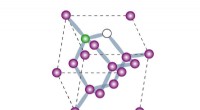
* Rigid structure: Solids have a fixed shape and volume because their molecules are tightly packed and held together by strong intermolecular forces (like covalent or ionic bonds).
* Direct force transmission: When a force is applied to a solid, it's transmitted directly through the rigid structure. This means the force travels along the line of action, causing deformation (bending, stretching, compression) within the solid.
* Elasticity: Many solids have elasticity, meaning they can deform under stress and return to their original shape when the force is removed. This allows them to store energy and transmit forces efficiently.
Fluids:
* Fluid structure: Fluids (liquids and gases) have a less rigid structure. Their molecules are less tightly packed and can move freely, interacting through weaker intermolecular forces.
* Indirect force transmission: When a force is applied to a fluid, it's transmitted through pressure waves. This means the force is distributed evenly in all directions.
* Viscosity: Fluids resist flow, a property called viscosity. This resistance arises from the internal friction between fluid molecules as they move past each other. The viscosity of the fluid influences how quickly the force is transmitted.
Key differences in force transmission:
* Directionality: Forces in solids are transmitted along a specific direction, while in fluids they spread out in all directions.
* Speed of transmission: Forces travel faster in solids than in fluids.
* Deformation: Solids typically deform when a force is applied, while fluids flow.
* Energy storage: Solids can store energy in their deformation, while fluids store energy in their pressure.
Examples:
* Solid: A bridge transmits the weight of vehicles through its rigid structure, causing it to bend slightly.
* Fluid: A submarine experiences pressure from the surrounding water, which is evenly distributed across its surface.
Understanding how forces are transmitted differently in solids and fluids is crucial in various fields like engineering, mechanics, and fluid dynamics. It helps us design structures, predict fluid behavior, and understand the forces at play in different scenarios.