Basic Level:
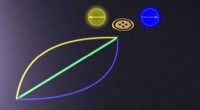
* Comparing Distance and Displacement:
* Project: Design an experiment where you move an object in various ways (straight line, curved path, back and forth) and measure the distance traveled and the displacement. Compare the results.
* Variations:
* Use different types of objects (ball, toy car, person walking).
* Include factors like speed, time, and obstacles in your experiment.
* Displacement vs. Distance in Daily Life:
* Project: Choose a daily activity (walking to school, driving to work) and analyze the difference between the distance traveled and the displacement.
* Variations:
* Map out the route and calculate the distance and displacement using different methods (GPS, Google Maps).
* Compare the distance and displacement of different routes for the same destination.
Intermediate Level:
* The Effect of Friction on Displacement:
* Project: Investigate how friction affects the displacement of an object sliding on different surfaces (wood, carpet, sandpaper).
* Variations:
* Use different objects with varying weights and surface areas.
* Measure the coefficient of friction for each surface.
* Displacement and Velocity:
* Project: Investigate the relationship between displacement, velocity, and time using a simple experiment (like rolling a ball down a ramp).
* Variations:
* Change the angle of the ramp to vary the acceleration.
* Explore different types of motion (constant velocity, accelerated motion).
Advanced Level:
* Displacement in Projectile Motion:
* Project: Analyze the displacement of a projectile launched at different angles and velocities.
* Variations:
* Use a motion sensor or video analysis software to track the projectile's motion.
* Develop a theoretical model to predict the displacement based on the launch conditions.
* Displacement and Relativity:
* Project: Explore the concept of displacement in the context of Einstein's Theory of Relativity.
* Variations:
* Investigate how displacement is affected by time dilation and length contraction.
* Use thought experiments to demonstrate the relativity of displacement.
Tips for Choosing a Project:
* Consider your interests: Choose a topic that genuinely excites you.
* Start simple: Begin with a basic project and then explore more complex ideas.
* Safety first: Always prioritize safety when designing and conducting experiments.
* Be creative: Don't be afraid to come up with your own unique ideas.
Remember to:
* State your hypothesis.
* Clearly define your variables.
* Use proper experimental techniques.
* Analyze your data and draw conclusions.
* Present your findings in a clear and concise way.
Good luck with your investigatory project!