* Straight line: Light travels in a straight line unless acted upon by a force like gravity. This is why we see stars in the night sky appearing in fixed positions.
* Constant speed: The speed of light in a vacuum is a fundamental constant, approximately 299,792,458 meters per second (186,282 miles per second). This speed is denoted by the symbol "c".
* No medium needed: Unlike sound waves, which require a medium like air or water to travel, light can travel through the vacuum of space.
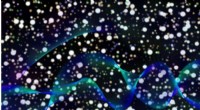
* Electromagnetic wave: Light is not just a ray, but an electromagnetic wave. This means it consists of oscillating electric and magnetic fields that travel perpendicular to each other and to the direction of propagation.
Visualizing it: Imagine a rope tied to a fixed point. If you shake the rope up and down, you create waves that travel along the rope. Light waves are similar, but instead of a rope, it's the electric and magnetic fields that oscillate and propagate through space.
Important notes:
* While light travels in a straight line through empty space, its path can be bent by massive objects like stars and galaxies due to the effect of gravity. This is known as gravitational lensing.
* Light can also be affected by the presence of matter, even in small amounts. For example, the light from distant stars can be slightly bent by the dust and gas in the interstellar medium.
Overall, light traveling through empty space is a fascinating phenomenon, showcasing the fundamental nature of light as an electromagnetic wave and its ability to travel at a constant speed through the vast emptiness of the universe.