Hard Skills:
* Mathematics: Strong foundation in algebra, calculus, trigonometry, differential equations, and linear algebra is crucial for understanding and applying physical principles.
* Problem-solving: Ability to break down complex problems into smaller, manageable parts, analyze data, and apply relevant physical laws to derive solutions.
* Analytical Thinking: Ability to identify patterns, make inferences, and draw conclusions from observations and data.
* Experimental Design & Data Analysis: Ability to design experiments, collect and analyze data, interpret results, and communicate findings effectively.
* Computational Skills: Proficiency with software tools like MATLAB, Python, or Mathematica for numerical simulations, data analysis, and visualization.
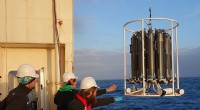
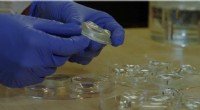
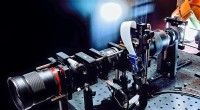
* Lab Techniques: Experience in handling scientific instruments, measuring quantities accurately, and ensuring safety in lab settings.
Soft Skills:
* Curiosity: A genuine desire to understand the workings of the natural world and ask questions.
* Creativity: Ability to think outside the box, develop new ideas, and find innovative solutions to problems.
* Critical Thinking: Ability to evaluate information, analyze arguments, and form well-supported judgments.
* Communication: Effective communication of ideas through writing, presentations, and discussions.
* Collaboration: Ability to work effectively in teams, share knowledge, and contribute to collaborative projects.
* Persistence: Determination to overcome challenges and persevere in the face of difficulties.
Additional Skills:
* Programming: Understanding programming concepts and using programming languages can be helpful for simulating physical systems, analyzing data, and developing research tools.
* Computer Science: Basic knowledge of computer architecture, algorithms, and data structures can be beneficial in understanding the underlying principles of various technologies.
Note: The specific skills needed may vary depending on the specific area of physics you are interested in. For example, theoretical physics requires stronger mathematical skills, while experimental physics emphasizes hands-on laboratory skills.