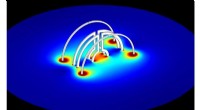
1. Mathematical Equations:
- Example: Newton's Law of Universal Gravitation. This equation describes the force of attraction between any two objects with mass. It is represented as:
* F = G * (m1 * m2) / r^2
* Where:
* F is the force of gravity
* G is the gravitational constant
* m1 and m2 are the masses of the two objects
* r is the distance between their centers
- How it models the world: This equation allows physicists to predict the strength of gravitational forces between objects of different masses and at different distances. This understanding has enabled us to launch satellites, understand the motions of planets, and even predict the existence of black holes.
2. Computer Simulations:
- Example: Climate models. These are complex computer programs that simulate the Earth's climate system, taking into account factors like atmospheric circulation, ocean currents, solar radiation, and greenhouse gases.
- How it models the world: Climate models allow scientists to study how the Earth's climate might change in the future under different scenarios, such as increased greenhouse gas emissions. They can be used to predict future temperatures, precipitation patterns, and sea level rise, helping us understand and potentially mitigate the effects of climate change.
These are just two examples, and there are many other ways physicists model the physical world. The choice of model depends on the specific phenomenon being studied and the level of detail required.