1. Elastic Deformation:
* Stress: When an external force acts on a solid, it creates internal stress within the material. This stress is the force acting on the material's cross-sectional area.
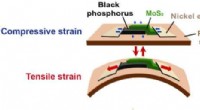
* Strain: The stress causes the solid to deform. This deformation is called strain, which is the change in shape or size relative to the original dimensions.
* Elasticity: Most solids are elastic, meaning they can deform under stress and return to their original shape when the stress is removed. This elastic deformation is what allows forces to be transmitted through the solid.
2. Interatomic Forces:
* Atoms in a solid are held together by strong interatomic forces. These forces can be:
* Ionic bonds: Attraction between oppositely charged ions.
* Covalent bonds: Sharing of electrons between atoms.
* Metallic bonds: Sharing of electrons between a lattice of positively charged ions.
* When a force is applied to the solid, these interatomic bonds deform, transferring the force to neighboring atoms. This process continues throughout the solid, propagating the force.
Here's a simplified analogy:
Imagine a row of tightly connected balls. If you push one ball at the end of the row, it will push the next ball, and so on, transferring the force down the line. The balls represent atoms, and the force of the push represents the external force applied to the solid.
Key Points:
* The ability of a solid to transmit force depends on its elasticity and the strength of its interatomic forces.
* Stiff materials have strong interatomic forces and high elasticity, allowing them to transmit forces efficiently.
* Flexible materials have weaker interatomic forces and lower elasticity, making them less efficient at transmitting force.
In summary, force transmission through a solid is a combination of elastic deformation, where the solid changes shape under stress, and interatomic forces, which transfer the force from atom to atom throughout the material.