Here's why:
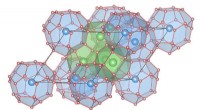
* Solids: Particles in solids are tightly packed together and vibrate in fixed positions. The strong attractive forces between particles keep them locked in a rigid structure, giving solids their definite shape and volume.
* Liquids: Particles in liquids are more loosely packed than solids, allowing them to move around and slide past each other. The forces of attraction are weaker than in solids, but still significant enough to maintain a definite volume.
* Gases: Particles in gases are widely spaced and move freely. The forces of attraction between particles are very weak, allowing gases to expand to fill their container.
Think of it this way: Imagine a group of people holding hands.
* Solid: They are all tightly packed together, holding hands firmly, making it difficult to move.
* Liquid: They are still holding hands but more loosely, allowing them to shuffle around a bit.
* Gas: They are all spread out, barely holding hands, moving around freely.