Why it appears constant:
* Newton's Law of Universal Gravitation: This law states that every object in the universe attracts every other object with a force directly proportional to the product of their masses and inversely proportional to the square of the distance between their centers.
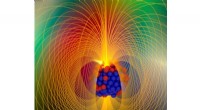
* Earth's Mass and Radius: Since Earth is a massive object with a relatively consistent density, its gravitational pull is strong and directed towards its center.
* Neglecting Air Resistance: In everyday scenarios, we usually ignore air resistance, which simplifies calculations.
However, the acceleration due to gravity actually varies due to:
* Altitude: The acceleration decreases as you move further away from Earth's surface. This is because the distance between you and the Earth's center increases.
* Latitude: Earth is not perfectly spherical, it's slightly flattened at the poles and bulging at the equator. This means gravity is slightly stronger at the poles and weaker at the equator.
* Local Density Variations: The Earth's density isn't perfectly uniform. Underground geological structures, mountains, and even large deposits of ore can cause subtle variations in gravity.
* Centrifugal Force: The Earth's rotation creates a centrifugal force that acts outward, slightly counteracting gravity, particularly at the equator.
Conclusion:
The acceleration due to gravity is a constant *approximation* for practical purposes near Earth's surface. However, it's important to understand that it's not truly constant and can vary due to factors like altitude, latitude, and local density variations.