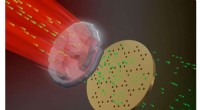
* As distance increases, the gravitational force decreases.
* As distance decreases, the gravitational force increases.
This is described mathematically by Newton's Law of Universal Gravitation:
F = G * (m1 * m2) / r²
Where:
* F is the force of gravity
* G is the gravitational constant (a fixed value)
* m1 and m2 are the masses of the two objects
* r is the distance between the centers of the two objects
Key takeaways:
* The force of gravity decreases rapidly with distance. This is why we feel the Earth's gravity strongly, but the Sun's gravity is much weaker even though the Sun is much more massive.
* The force of gravity is inversely proportional to the square of the distance. This means that if you double the distance, the force becomes four times weaker. If you triple the distance, the force becomes nine times weaker, and so on.
Examples:
* You feel a stronger pull of gravity when you are standing on the Earth's surface than when you are in a plane flying at a high altitude.
* The gravitational force between the Earth and the Moon is weaker than the gravitational force between the Earth and the Sun, because the Moon is much farther away from the Earth than the Sun is.
In summary:
Distance plays a significant role in determining the strength of the gravitational force. The farther apart two objects are, the weaker the gravitational force between them. This relationship is inversely proportional and follows the square of the distance.