What is a Non-Contact Force?
A non-contact force is a force that acts on an object without any direct physical contact between the objects. This means the force can exert an influence even when the objects are separated by a distance.
Examples of Non-Contact Forces:
* Gravity: The force of attraction between any two objects with mass. This is what keeps us on the ground and what holds the planets in orbit around the sun.
* Electromagnetism: This force is responsible for interactions between electrically charged objects. It's responsible for things like:
* Electric Forces: The attraction or repulsion between charged objects.
* Magnetic Forces: The attraction or repulsion between magnets or magnetic materials.
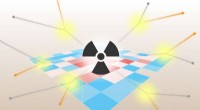
* Weak Nuclear Force: This force is responsible for radioactive decay, a process where atoms release particles.
* Strong Nuclear Force: This force holds the protons and neutrons together in the nucleus of an atom.
How Non-Contact Forces Work:
The mechanisms behind non-contact forces are complex and often involve fundamental particles and fields. Here's a simplified explanation:
* Fields: Some forces, like gravity and electromagnetism, are described as existing in fields that permeate space. Objects with mass or charge interact with these fields.
* Exchange Particles: Other forces are explained by the exchange of particles between objects. For example, the strong force is mediated by particles called gluons.
Key Takeaway:
Non-contact forces are a fundamental part of the universe. They allow objects to interact even when they are not physically touching. Understanding these forces is crucial for many areas of science, engineering, and technology.