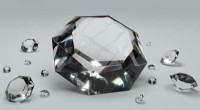
Here are some examples of physical properties:
Appearance:
* Color: The way a substance reflects light (e.g., red, blue, transparent).
* Luster: How light reflects off a surface (e.g., shiny, dull).
* Transparency: How much light passes through a substance (e.g., transparent, translucent, opaque).
Texture:
* Hardness: Resistance to scratching or indentation (e.g., hard, soft).
* Brittleness: Tendency to break or shatter (e.g., brittle, malleable).
* Ductility: Ability to be stretched into wires (e.g., ductile, non-ductile).
Behavior:
* Melting point: Temperature at which a solid changes to a liquid.
* Boiling point: Temperature at which a liquid changes to a gas.
* Density: Mass per unit volume (e.g., dense, less dense).
* Solubility: Ability to dissolve in a solvent (e.g., soluble, insoluble).
* Conductivity: Ability to conduct heat or electricity (e.g., conductor, insulator).
Key characteristics of physical properties:
* Observable: They can be seen or measured directly.
* Non-destructive: They can be determined without altering the chemical makeup of the substance.
* Intensive: They do not depend on the amount of the substance present.
Contrast with chemical properties:
Chemical properties describe how a substance reacts with other substances, leading to a change in its chemical composition. For example, flammability (ability to burn) or reactivity with acids are chemical properties.
Understanding physical properties is crucial in various scientific fields, including chemistry, physics, and materials science, for identifying, classifying, and characterizing different substances.