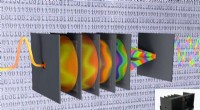
* Vacuum Tubes: These tubes contain a near-perfect vacuum, eliminating air resistance and collisions that would hinder electron flow.
* Heating a Cathode: A heated filament (called the cathode) emits electrons through a process called thermionic emission. The heat provides energy to the electrons, allowing them to overcome the force holding them within the metal.
* Electrodes and Voltage: Electrodes (anode and other control grids) are positioned within the vacuum tube. By applying a voltage difference between the electrodes, an electric field is created.
* Electron Beam Formation: The electric field pulls the emitted electrons from the cathode, forming a focused beam that travels through the tube towards the anode.
Key Figures:
* Thomas Edison: In 1883, Edison observed the phenomenon of thermionic emission (though he didn't fully understand it). This was a crucial early step in understanding electron behavior.
* John Ambrose Fleming: In 1904, Fleming invented the first vacuum tube (the diode) which could rectify alternating current. This relied on the electron flow between cathode and anode.
* Lee De Forest: In 1907, De Forest added a third electrode (the grid) to the vacuum tube, creating the triode. This allowed amplification of signals by controlling the electron flow.
While these individuals played a key role in developing the vacuum tube and understanding its function, the electron beam itself is a product of fundamental physical laws, not the creation of a single person.