Here's why:
* Stationary pattern: A standing wave appears to be stationary, unlike traveling waves that move through a medium. This is because the wave's energy doesn't propagate, it oscillates in place.
* Portions that don't move (nodes): These are points along the wave where the amplitude is always zero.
* Portions with large amplitude (antinodes): These are points where the amplitude reaches its maximum value.
How do standing waves form?
Standing waves are created when two identical waves traveling in opposite directions interfere with each other. The superposition of these waves results in a pattern of fixed nodes and antinodes.
Examples of standing waves:
* Vibrating strings on musical instruments: When you pluck a guitar string, the string vibrates, producing a standing wave pattern.
* Sound waves in a pipe: When you blow across the end of a pipe, sound waves reflect back and forth, creating standing waves.
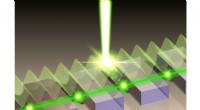
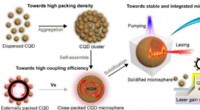
* Electromagnetic waves in a resonant cavity: Standing waves are used in microwave ovens, lasers, and other devices.
Let me know if you'd like more details on any of these aspects of standing waves!