Here's a breakdown:
* Transverse Motion: This is the familiar up-and-down motion we see on the surface of the water. The water particles move perpendicular to the direction of the wave propagation.
* Longitudinal Motion: This is the less obvious motion, where the water particles also move slightly back and forth in the direction the wave is travelling.
Think of it like this: imagine a floating object on a water surface. When a wave passes, the object doesn't just move up and down, but also slightly forward and backward, following the wave's path.
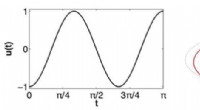
This combination of motions is what creates the characteristic circular or elliptical path of the water particles as a wave passes.
It's important to remember that the water itself doesn't travel with the wave. The wave is just a transfer of energy, causing the water particles to oscillate in a complex pattern.