1. Node in a standing wave:
* This is the most common use of the term "node" in physics.
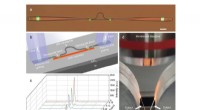
* In a standing wave, a node is a point of zero amplitude.
* For example, in a vibrating string, the nodes are the points where the string remains stationary.
* This concept applies to various types of waves, including sound waves and electromagnetic waves.
2. Node in a network:
* In physics, especially in the study of networks (like electrical circuits, computer networks, or social networks), a node is a point of connection or intersection.
* For example, in an electrical circuit, the nodes are the points where multiple wires or components connect.
3. Node in a quantum system:
* In quantum mechanics, a node refers to a point in space where the probability of finding a particle is zero.
* This is related to the concept of wave function and its shape.
4. Other uses:
* The term "node" can be used in other contexts, like "node of Ranvier" in biology, which refers to a gap in the myelin sheath of a nerve fiber.
To understand the meaning of "node" in a particular context, you need to consider the specific field of physics and the surrounding information.
For example, if you see the term "node" in a discussion about waves, it most likely refers to a point of zero amplitude in a standing wave.
It's always a good idea to look for context clues and definitions when encountering unfamiliar terms in scientific literature.